About Bromeliaceae
Bromeliaceae, the bromeliad family, is a family of monocots placed in the order Poales under APG IV, with roughly 80 genera and 3,700 to 3,800 species. Apart from a single species in West Africa, all are native to the tropical and subtropical Americas. Most species form rosettes of overlapping leaves. Many hold rainwater in a central tank and absorb water and nutrients through scale-like trichomes on the leaf surface, and the majority grow as epiphytes on trees or rocks. In horticulture the family is best known for Tillandsia, the air plants, together with Aechmea, Neoregelia, Vriesea and Guzmania, while the pineapple (Ananas) is its only major food crop. It is also called the pineapple family.
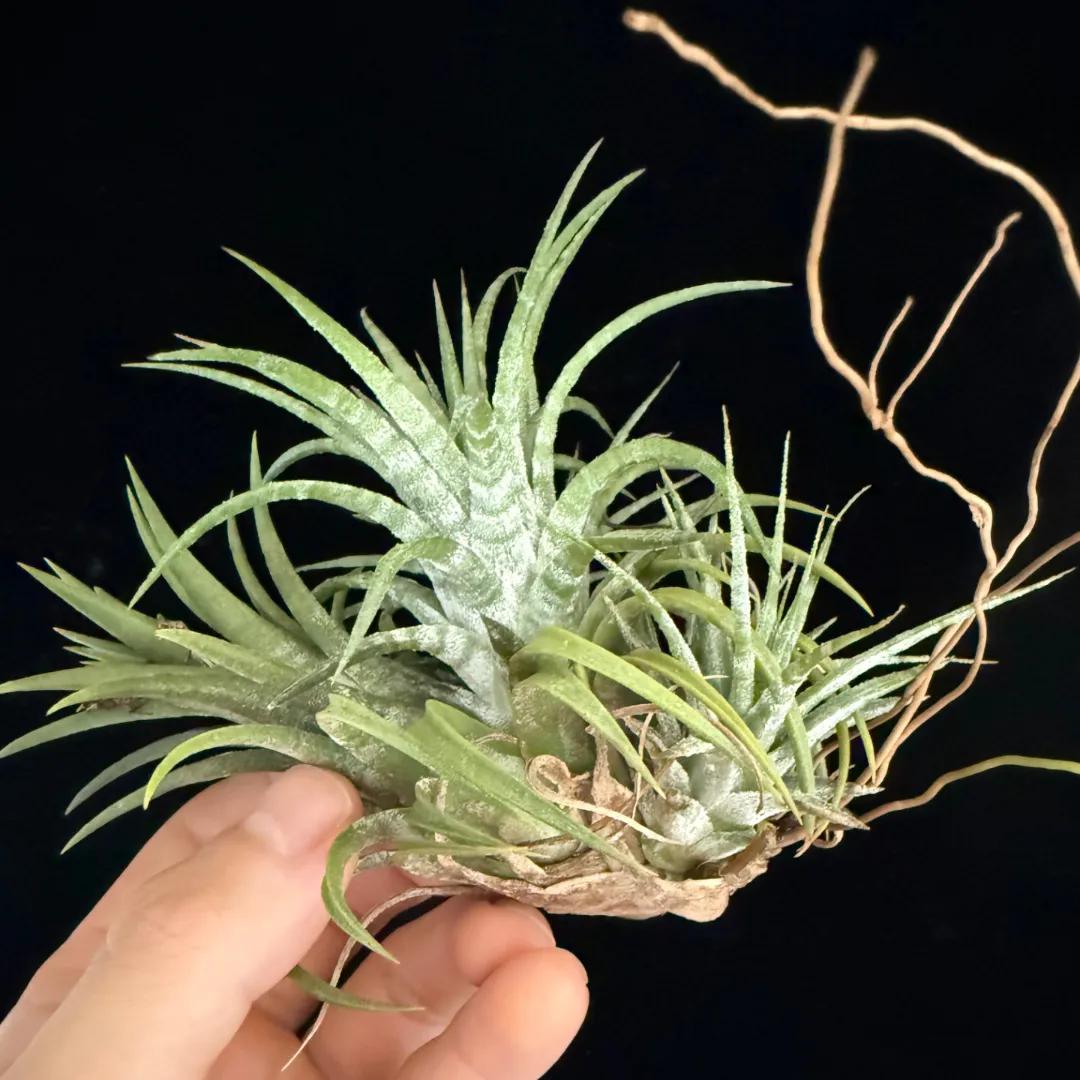
Tillandsia is a large genus of over 700 species of epiphytic plants in the family Bromeliaceae, commonly known as air plants. Native to Central and South America, the southern United States, and Mexico, they grow attached to trees, rocks, and other surfaces rather than in soil. They absorb water and nutrients through specialized scales (trichomes) on their leaves, making them highly adaptable to environments ranging from tropical rainforests to arid deserts. Many species are popular houseplants valued for their unique forms and minimal care requirements.
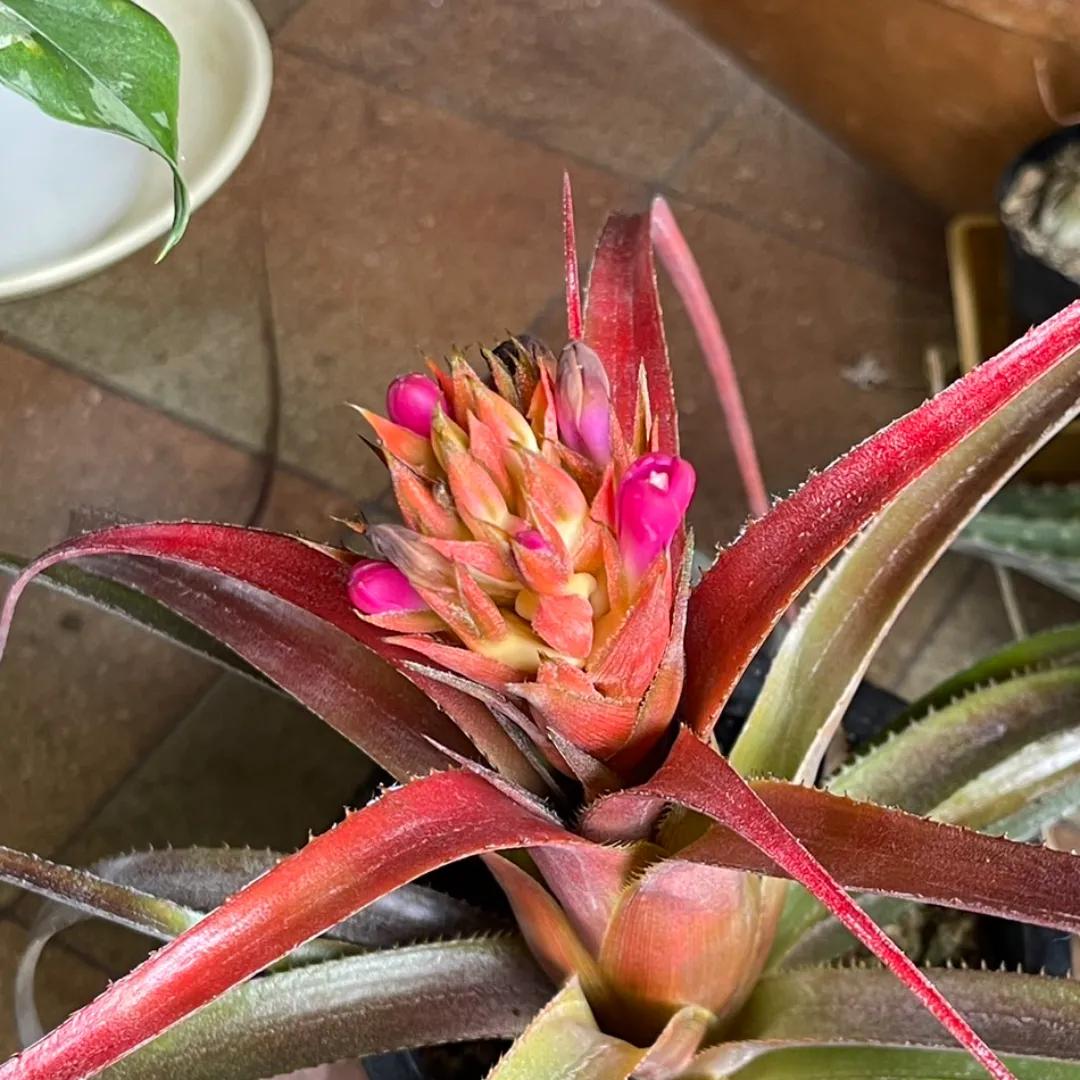
Aechmea is a genus in subfamily Bromelioideae of the bromeliad family, with about 250 species, the largest genus of the subfamily. It ranges from Mexico through Central and South America to the Caribbean, and most species are epiphytes. The strap-shaped leaves overlap into a water-holding tank rosette, the leaf margins are spiny, and the plants are known for their colorful, long-lasting bracts and inflorescences; the fruit is a berry. In horticulture Aechmea fasciata, the silver vase plant, is the best known, along with A. chantinii and A. recurvata.
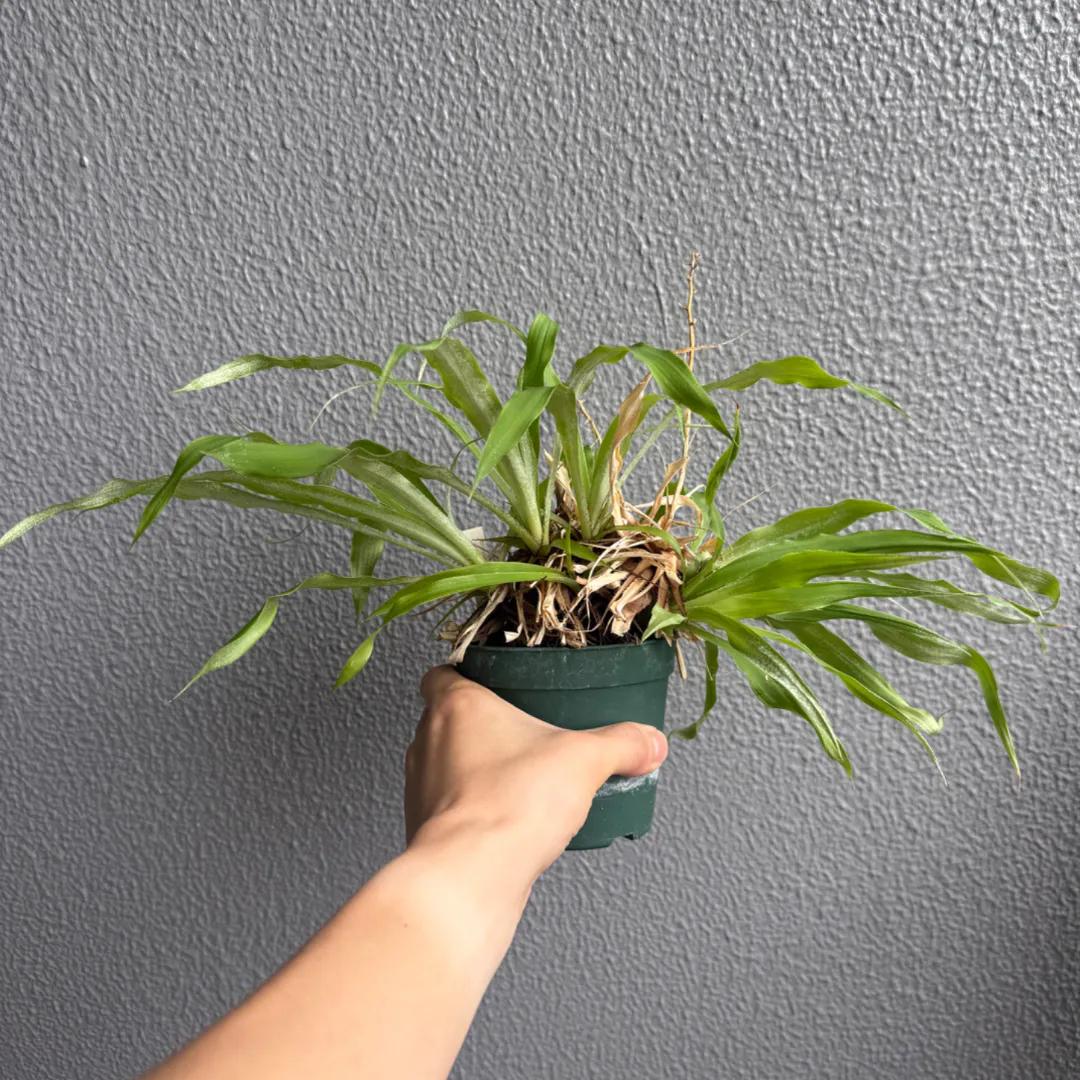
Pitcairnia is a genus in subfamily Pitcairnioideae of the bromeliad family, with about 400 species, second in size only to Tillandsia. It ranges from Cuba and Mexico to Argentina and is most diverse in Colombia, Peru and Brazil; Pitcairnia feliciana of Guinea in West Africa is the only bromeliad native outside the Americas. Most species are terrestrial or grow on rocks in moist habitats, with soft, narrow leaves and tall spikes of red or orange tubular flowers visited by hummingbirds. The fruit is a capsule with winged seeds. Species such as P. flammea and P. tabuliformis are grown in cultivation.
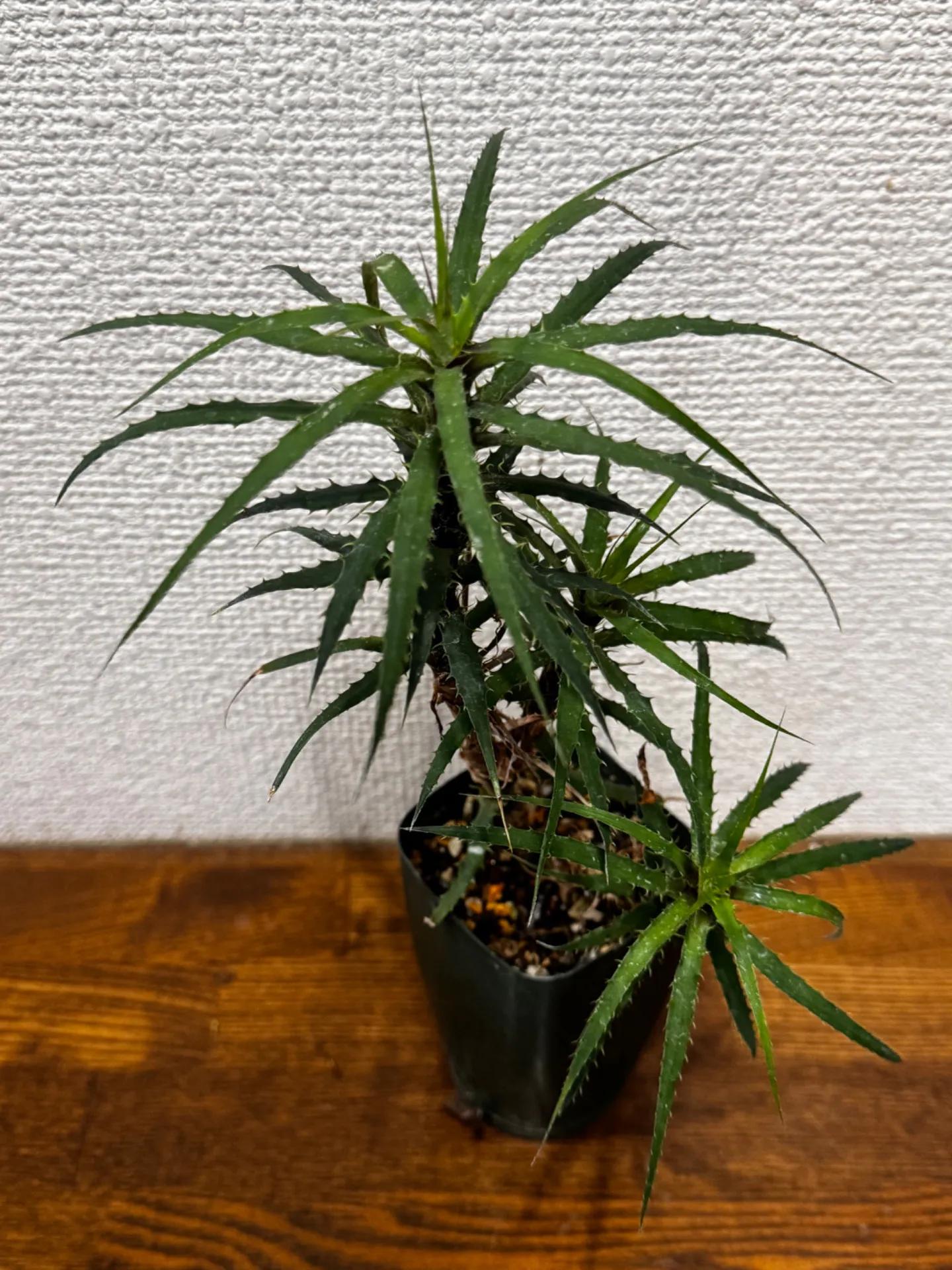
Rokautskyia is a genus in subfamily Bromelioideae of the bromeliad family, comprising about 14 species separated from Cryptanthus in 2017. It is native to the Atlantic Forest of eastern Brazil, especially the state of Espírito Santo. Many species develop elongated, branching stems and bear narrow leaves with wavy, softly spined margins and flowers set in the center of the rosette. The name honors the Brazilian plant collector Roberto Anselmo Kautsky. Species such as R. microglazioui are grown by bromeliad enthusiasts.
Sincoraea is a genus in subfamily Bromelioideae of the bromeliad family. Described in 1908 and later merged into Orthophytum, it was re-established in 2017 for about 11 species. It is endemic to the Espinhaço Range of Brazil, mainly the Chapada Diamantina in Bahia, growing on rocky outcrops of the campo rupestre above 800 m. The white tubular flowers sit directly in the center of the rosette without a stalk, the leaves turn wholly or partly red at flowering, and the flowers are pollinated by hummingbirds. Species such as S. burle-marxii and S. navioides are available in cultivation.
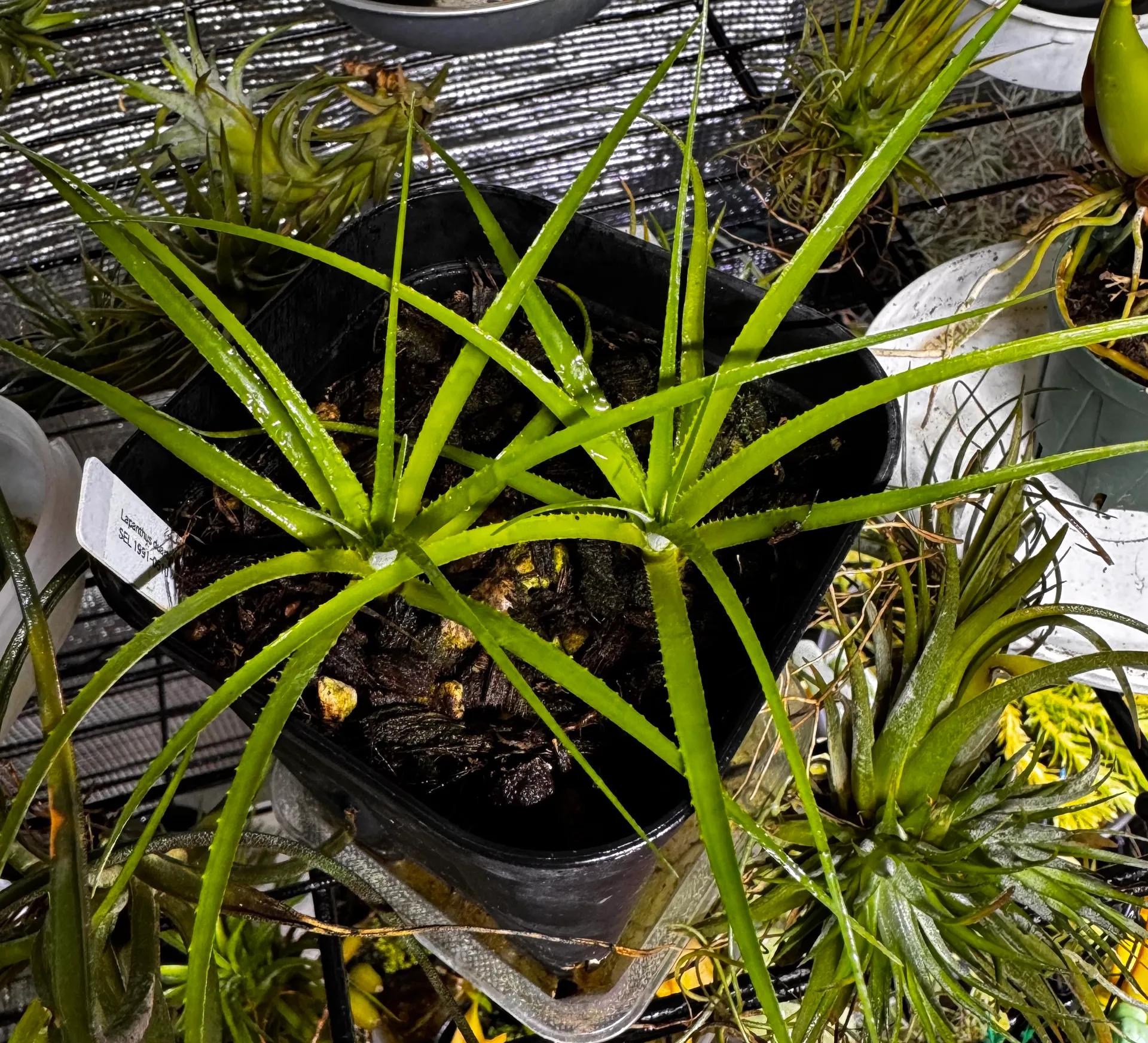
Lapanthus is a small genus in subfamily Bromelioideae of the bromeliad family, established in 2010 for species transferred from Orthophytum and Cryptanthus. It is endemic to sandstone and quartzite outcrops of the campo rupestre in the southern Espinhaço Range of Minas Gerais, Brazil, with two to three known species. The flowers are borne stalkless in the center of the rosette and have white sepals and petals with ciliate margins. The genus is rarely seen in cultivation.
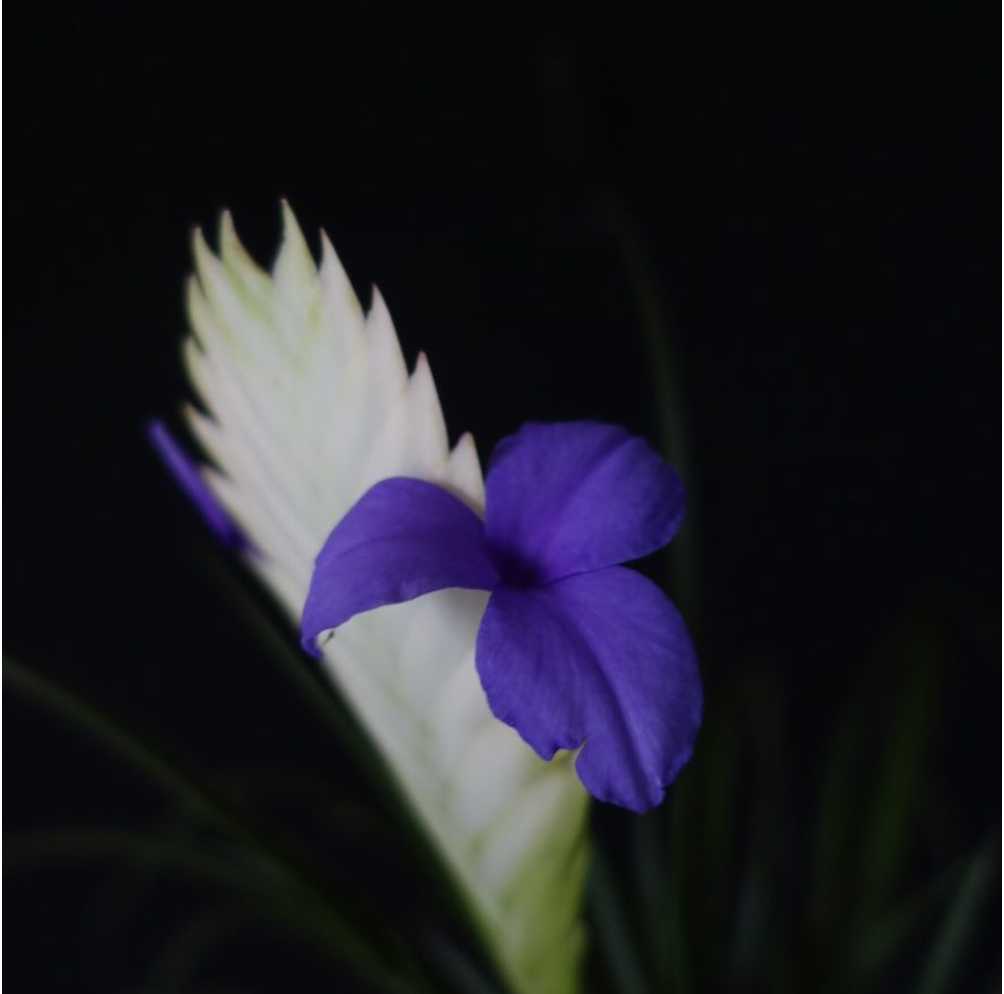
Wallisia is a genus in subfamily Tillandsioideae of the bromeliad family, comprising four species and one hybrid separated from Tillandsia in the 2016 revision of the subfamily. It ranges from Central America to northern South America, including Colombia, Ecuador and Peru, and the plants are epiphytes. From a rosette of thin leaves they produce a flat, paddle-shaped inflorescence of pink bracts with violet-blue flowers. Wallisia cyanea, the pink quill, formerly Tillandsia cyanea, has long been grown as a houseplant.
Genera without registered species (68)
Scientific Name
Bromeliaceae