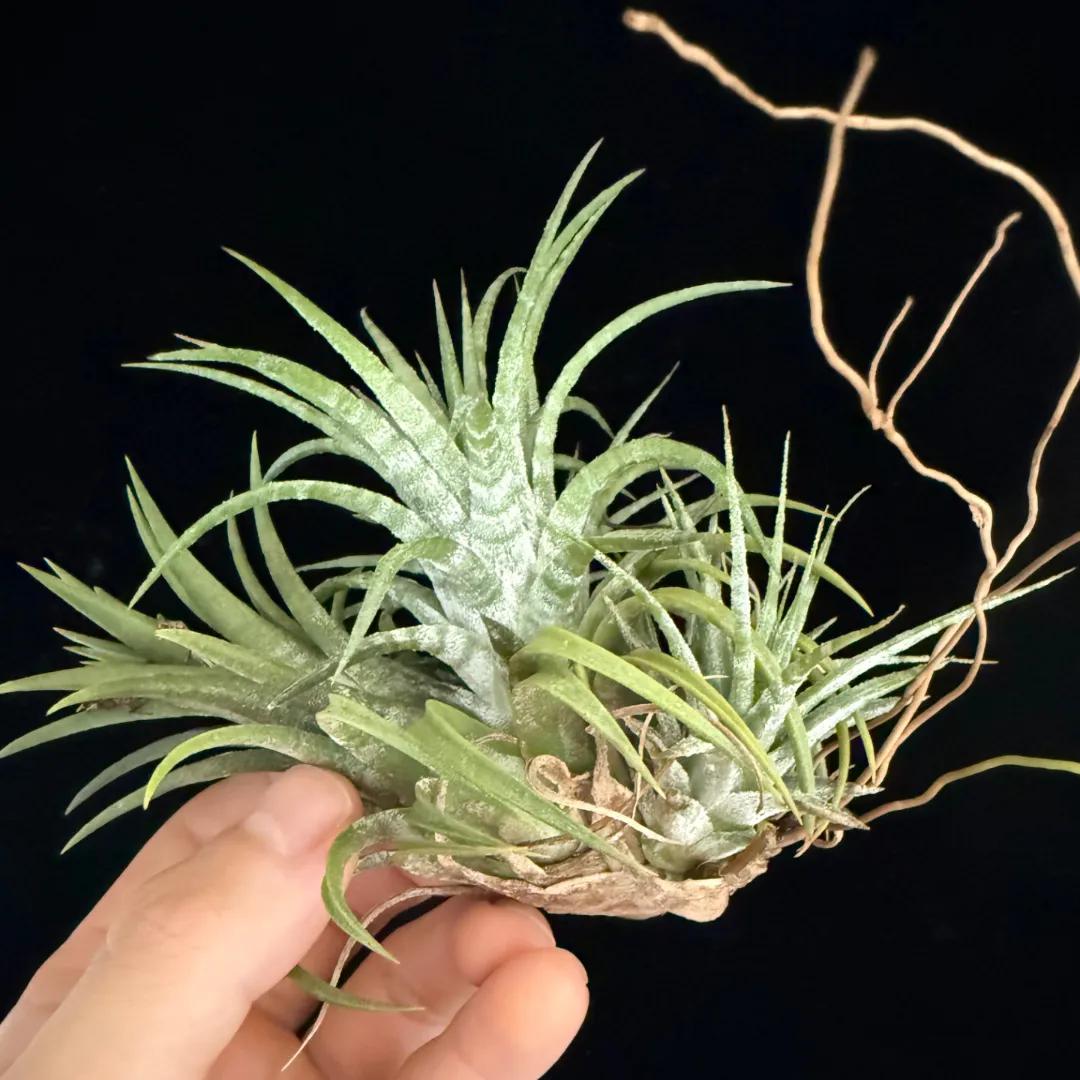
Tillandsia ionantha
About ionantha
A popular small epiphytic species that forms compact rosettes. The leaves turn vivid red during the blooming cycle, producing purple tubular flowers. It clumps readily over time.
Care guide for ティランジア(エアプランツ)
Tillandsia属(エアプランツ)は土を必要としない着生植物です。葉から水分を吸収するため、独特の管理方法が必要です。
What the guide covers
- ティランジアとは
- 水やりの方法
- 風通し
- 日光・置き場所
- 温度管理
- 肥料
- 飾り方・固定方法
- 着生について
- 発根について
- 板付けの方法
- 開花について
- 増やし方
- 日常のお手入れ
- よくあるトラブル
Frequently asked questions about Tillandsia ionantha
- How long does Tillandsia ionantha live? Does it die after flowering?
Each rosette of Tillandsia ionantha flowers only once in its life. After flowering, the mother plant stops producing new leaves and slowly declines over several months to years. Before it fades it produces offsets (pups) at the base, so by growing the pups you can keep the same plant going for many years.
How soon a plant flowers depends on how well established it is. A plant that has not built up enough reserves may go years without blooming.
- When does it flower, and why do the leaves turn red?
As flowering approaches, the leaves around the center of the rosette blush bright red, and a tubular violet flower emerges from the middle. Each rosette flowers once a year at most, and the bloom lasts from a few days to about two weeks.
The red coloring is a sign that the plant is ready to flower, not a symptom of disease or sunburn. The leaves gradually return to green after the flower fades.
- When should I separate the pups?
Pups appear at the base of the mother plant after flowering. If you want to separate them, wait until each pup is one third to one half the size of the mother. Pups removed too early hold little water and dry out easily.
If you leave the pups attached, the plant forms a clump around the mother. Clumps are easier to keep evenly moist and several rosettes can color up and flower at the same time.
- How do I get it through winter? Can it stay outdoors?
Tillandsia ionantha is damaged by frost, so in most of Japan it is brought indoors for winter. Aim for a bright windowsill that stays above 5°C, and ideally above 10°C.
Growth slows in winter, so water less often. Mist or soak briefly in the morning on a mild day so the plant is dry by nightfall, and keep it out of the direct blast of heaters, which dries it out too much.
Types of ionantha
23
Tillandsia ionantha var. ionanthaThe type variety. Native to Mexico and Central America, characterized by a compact rosette.
Tillandsia ionantha var. maximaA naturally occurring variety that grows significantly larger than the type variety.
Tillandsia ionantha var. strictaA variety characterized by elongated, upright leaves forming a tubular rosette.
Tillandsia ionantha var. vanhyningiiA caulescent variety with long, downward-growing stems and leaves densely covered in trichomes.
Tillandsia ionantha var. stricta forma fastigiataA form distinguished by its densely clustered, strongly erect leaves that create a compact, columnar growth habit.
Tillandsia ionantha 'Albino'A white-flowered cultivar sharing similar characteristics with Druid.
Tillandsia ionantha 'Apretado'RFI
Tillandsia ionantha 'Druid'A leucistic cultivar that turns yellow to white during blooming and produces white flowers instead of the typical purple.
Tillandsia ionantha 'Fuego'A cultivar that turns vivid red across the entire plant during the blooming period.
Tillandsia ionantha 'Fuego Red Giant'
Growth Records of ionantha
24


