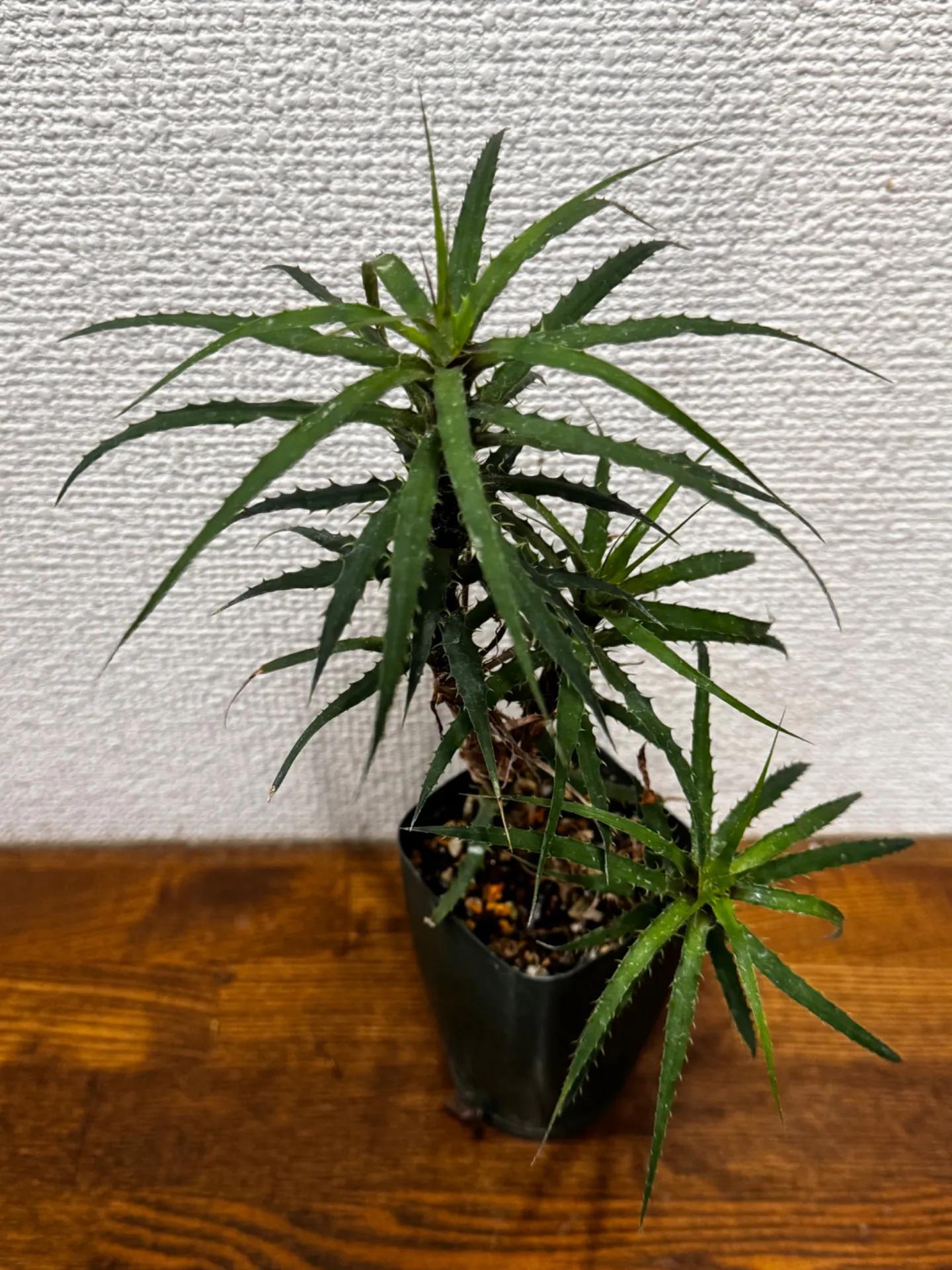
Rokautskyia microglazioui
About microglazioui
A delicate terrestrial bromeliad characterized by narrow leaves with scalloped margins and soft spines. Originally described as Cryptanthus microglazioui in 1998 and transferred to Rokautskyia in 2017. The specific epithet refers to its resemblance to Cryptanthus glazioui but in smaller form. Develops a branching stem reaching approximately 15 cm. Endemic to the Atlantic Forest of Espírito Santo state, Brazil.
Frequently asked questions about Rokautskyia microglazioui
- What kind of genus is Rokautskyia, and how does it differ from Cryptanthus?
Rokautskyia was established in 2017 when the genus Cryptanthus was revised, and fourteen species formerly placed in Cryptanthus were transferred to it. The genus name honors the Brazilian naturalist Roberto Anselmo Kautsky. This species too was described in 1998 as Cryptanthus microglazioui and moved to Rokautskyia in that revision.
The split rests on DNA analysis and flower structure. Cryptanthus bears a mix of male and bisexual flowers on one plant, whereas all the flowers of Rokautskyia are bisexual. The epithet microglazioui means a smaller plant resembling the related species glaziovii.
- I hear it is a small ground-dwelling species. What potting mix should I use?
This species grows on the forest floor in the state of Espírito Santo in southeastern Brazil. Unlike epiphytic bromeliads it develops a substantial root system and takes up water and nutrients through the roots. It forms a branching stem about 15 cm tall with narrow, wavy-edged leaves bearing soft spines.
Use a mix that both holds moisture and drains well, such as peat or coconut coir blended with perlite, sand, and fine bark. It has no water-holding tank at the leaf bases, so water the mix rather than the plant.
- How much humidity and water does it need? Can I grow it in a terrarium?
Keep the humidity between 50 and 80 percent. The mix should stay lightly moist at all times. Water when the surface begins to dry, but avoid waterlogging, which causes root rot. Once or twice a week is a typical rhythm.
Bright indirect light suits it best, and direct sun scorches the leaves. Being small and fond of high humidity, it does well in a glass container or terrarium. In a nearly closed setup, open the lid now and then so the air does not stagnate.
- Does it die after flowering? How do I separate the pups, and how cold can it go in winter?
Each rosette flowers once in its life, producing small white flowers at the center of the leaves. After flowering the mother plant produces pups and gradually declines. Separate a pup once it is at least one third the size of the mother and pot it in the same mix.
The ideal temperature range is 15 to 29°C. Aim for an indoor spot that stays above 15°C in winter. Below 10°C growth stops and the plant is easily damaged. Water sparingly in winter while keeping humidity up and avoiding cold.
Growth Records of microglazioui
1