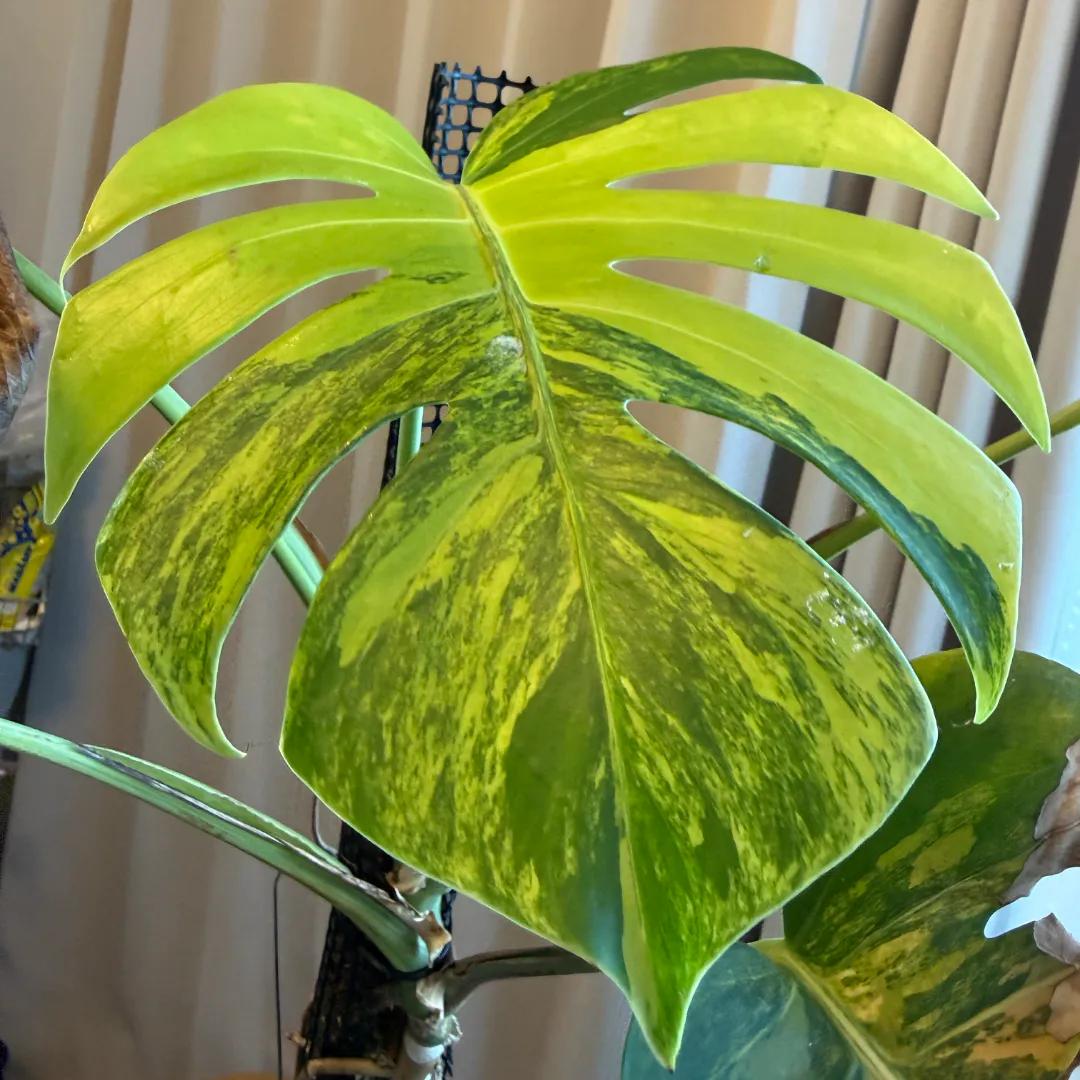
Monstera deliciosa
About deliciosa
Iconic tropical climbing plant with large, glossy leaves featuring distinctive holes and splits (fenestrations). In the wild, produces edible fruit with a flavor reminiscent of pineapple and banana. One of the most popular houseplants worldwide.
Care guide for モンステラ(モンステラ)
Monstera属は中南米原産の熱帯植物で、独特の切れ込みや穴の入った葉が人気の観葉植物です。丈夫で育てやすく、インテリアグリーンとして世界中で愛されています。
Frequently asked questions about Monstera deliciosa
- Why are there no holes or splits in the leaves?
Young plants of Monstera deliciosa have entire, heart-shaped leaves, and only start producing split and perforated leaves as they grow. This usually takes about two years, but it depends on the size of the plant rather than its age, so small plants and fresh cuttings normally keep producing solid leaves for a while.
If an established plant stops producing splits, insufficient light is the most common cause. In dim spots the plant keeps its leaves solid so as not to lose leaf area. Move it to bright indirect light, give it a pole to climb, and feed it during the growing season so it builds up strength. Split leaves usually return after a few new leaves.
- It has grown too big. How do I prune and take cuttings? Can I cut the aerial roots?
Prune during the growing season, from May to September, cutting overlong stems just above a node. The sap contains calcium oxalate and can irritate skin and mucous membranes, so wear gloves. Divide the cut stems into pieces of two or three nodes with an aerial root attached, leave one or two leaves, and root them in water or soil. Roots appear in about two weeks to a month, and sooner when the piece already carries an aerial root.
Aerial roots take in moisture and oxygen from the air and anchor the plant, so as a rule they are left alone. If they bother you, remove only a few at the base. Better still, guide them into the pot or onto a pole while they are still short and flexible. Once in the soil they work like ordinary roots and hold the plant up.
- What is the minimum winter temperature, and how should I water in winter?
The plant survives winter at a minimum of 5°C, but growth stops and leaves are easily damaged below 10°C, so a room that stays above 10°C is safer. At 13 to 15°C or more it keeps growing through winter. A windowsill gets almost as cold as outdoors at night, so move the plant away from the glass after dark and keep it out of the direct flow of heaters.
The plant takes up much less water in winter. Wait two or three days after the soil surface dries before watering. Once every two weeks is often enough, and overwatering leads to root rot. If heating dries the air, mist the leaves lightly during a warm part of the day.
- How is it different from Monstera adansonii (Swiss cheese vine)?
The easiest difference is the shape of the openings. Monstera deliciosa has deep splits that reach the leaf edge, and large plants also develop rows of holes inside the leaf. Monstera adansonii has no splits at the margin, only oval window-like holes inside the leaf.
Size and texture differ as well. Monstera deliciosa leaves are large, 25 to 90 cm long, thick and glossy, and mature plants develop a ruffled joint where the leaf meets the stalk. Monstera adansonii leaves are small and thinner, about 20 to 30 cm long and 7 to 10 cm wide, and its slender stems trail along the ground unless given support.
Types of deliciosa
2
Growth Records of deliciosa
2
