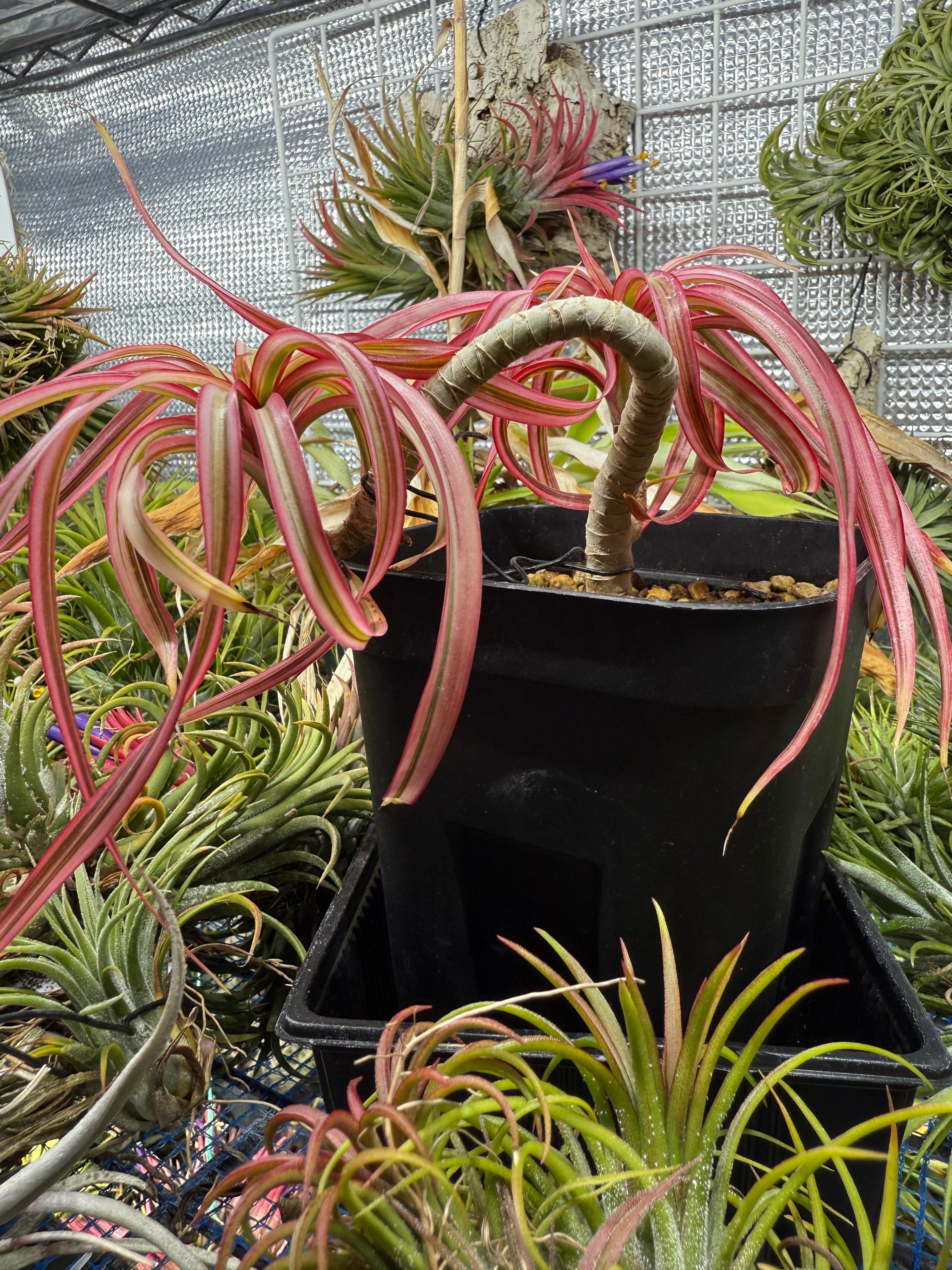
About Dracaena
Dracaena is a genus of about 200 species in the subfamily Nolinoideae of Asparagaceae, native mainly to Africa, with others in southern Asia, northern Australia, Hawaii and Central America. It includes tree-like species with woody stems, such as the dragon tree Dracaena draco, and stemless species that spread by rhizomes and bear stiff, fleshy leaves. Plants of the World Online includes the former genera Sansevieria and Pleomele in Dracaena, based on molecular studies, although some databases still keep Sansevieria separate. Species grown as houseplants include Dracaena fragrans, Dracaena trifasciata and Dracaena sanderiana.
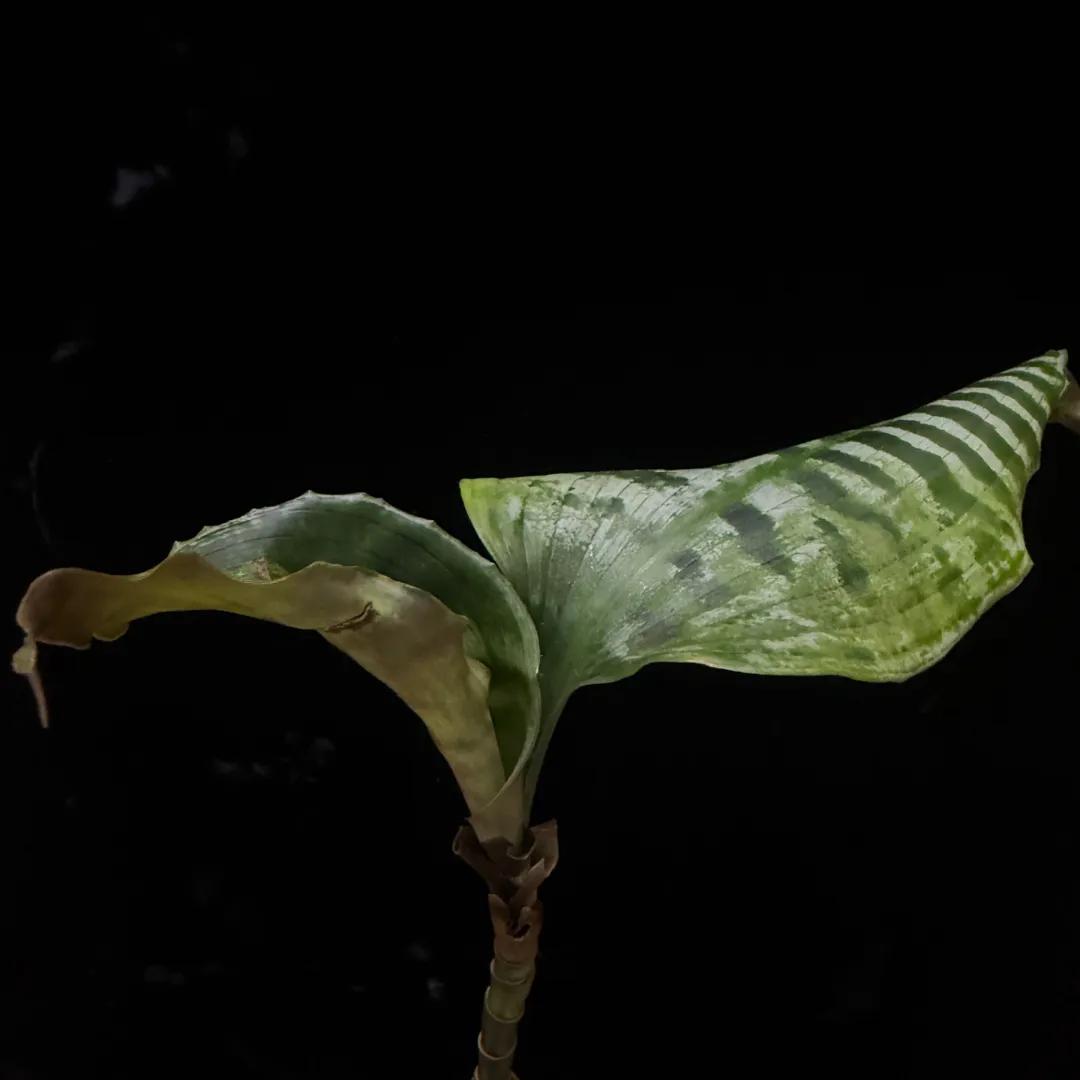
Dracaena goldieana is a small, rhizomatous understory shrub or subshrub native to Nigeria and western Central Africa, usually 30 to 60 cm tall with a slender stem up to about 1 cm thick. Its ovate leaves are 18 to 30 cm long and up to 6.5 cm wide, end in a thread-like tip and remain along the whole length of the stem. They are glossy dark green with transverse bands of light gray to silver. Small, fragrant white flowers are stalkless and borne in dense clusters. The plant grows slowly and is cultivated as an ornamental foliage plant, outdoors in tropical climates and indoors elsewhere. It has also been placed in the genus Pleomele as Pleomele goldieana. The plant contains saponins and can cause vomiting, drooling, loss of appetite and diarrhea in dogs and cats if eaten.
Dracaena fragrans is a slow-growing shrub or tree native throughout tropical Africa, usually with several stems from the base, reaching about 1.5 to 15 m tall in the wild. Its glossy green, strap-shaped to lanceolate leaves are 20 to 150 cm long and 2 to 12 cm wide. White flowers marked with a red to purple central line are borne in panicles and are strongly fragrant, giving the species its name, and they are followed by bright orange berries 1 to 2 cm across. Plants once sold as Dracaena deremensis, such as 'Warneckei' and 'Janet Craig', belong to this species. The cultivar 'Massangeana', with a broad yellow central stripe on each leaf, is widely grown as a houseplant. The species is also planted as a hedge in Africa. The plant contains saponins and is toxic to dogs, cats and horses, causing vomiting, drooling and loss of appetite if eaten.
Dracaena trifasciata is a stemless perennial that spreads by creeping rhizomes to form dense clumps, native to tropical West and Central Africa. It was long known as Sansevieria trifasciata Prain and was transferred to Dracaena by Mabberley in 2017. Stiff, upright, sword-shaped leaves rise from the rhizome and are usually 40 to 120 cm long and 2.5 to 7 cm wide, dark green with pale gray-green crossbands. Greenish white to cream flowers are borne on an erect raceme 40 to 75 cm tall, and some open fragrant at night. The plant uses CAM photosynthesis, opening its stomata at night to take in carbon dioxide, which reduces water loss and contributes to its drought tolerance. Many cultivars are grown, including 'Laurentii' with yellow leaf margins and the dwarf rosette-forming 'Hahnii'. The leaves contain saponins and are toxic to dogs and cats, causing nausea, vomiting and diarrhea if eaten.
Dracaena concinna is a shrub or small tree up to about 4 m tall, endemic to Mauritius in the western Indian Ocean. It has a straight, grayish trunk topped by clusters of long, narrow, lanceolate leaves, and bears orange-red berries. In the wild it survives in remnants of dry coastal forest on islets off the Mauritian coast, including Île aux Aigrettes and Gunner's Quoin, and it has been introduced to Round Island. The IUCN Red List classifies it as Endangered in the wild. Stem cuttings root very easily, and nurseries in Mauritius propagate the species in large numbers for ornamental planting. In Mauritius it is called bois de chandelle, a French name also used for other Dracaena species of the Mascarene Islands. The species was described by Carl Sigismund Kunth in 1850.
Scientific Name
Dracaena
Family