About Anacardiaceae
Anacardiaceae, the cashew or sumac family, is a family of eudicots placed in the order Sapindales under APG IV, with about 80 genera and 600 to 900 species. It is distributed mainly in the tropics and extends into warm temperate regions. Most members are trees or shrubs with resin canals, and the sap of many species contains urushiol and related compounds that can cause skin irritation. The leaves are usually pinnately compound and the fruit is a drupe. The family includes the fruit and nut crops mango (Mangifera), cashew (Anacardium) and pistachio (Pistacia), as well as the lacquer tree (Toxicodendron). In horticulture the Madagascan caudiciform genus Operculicarya is grown as a succulent.
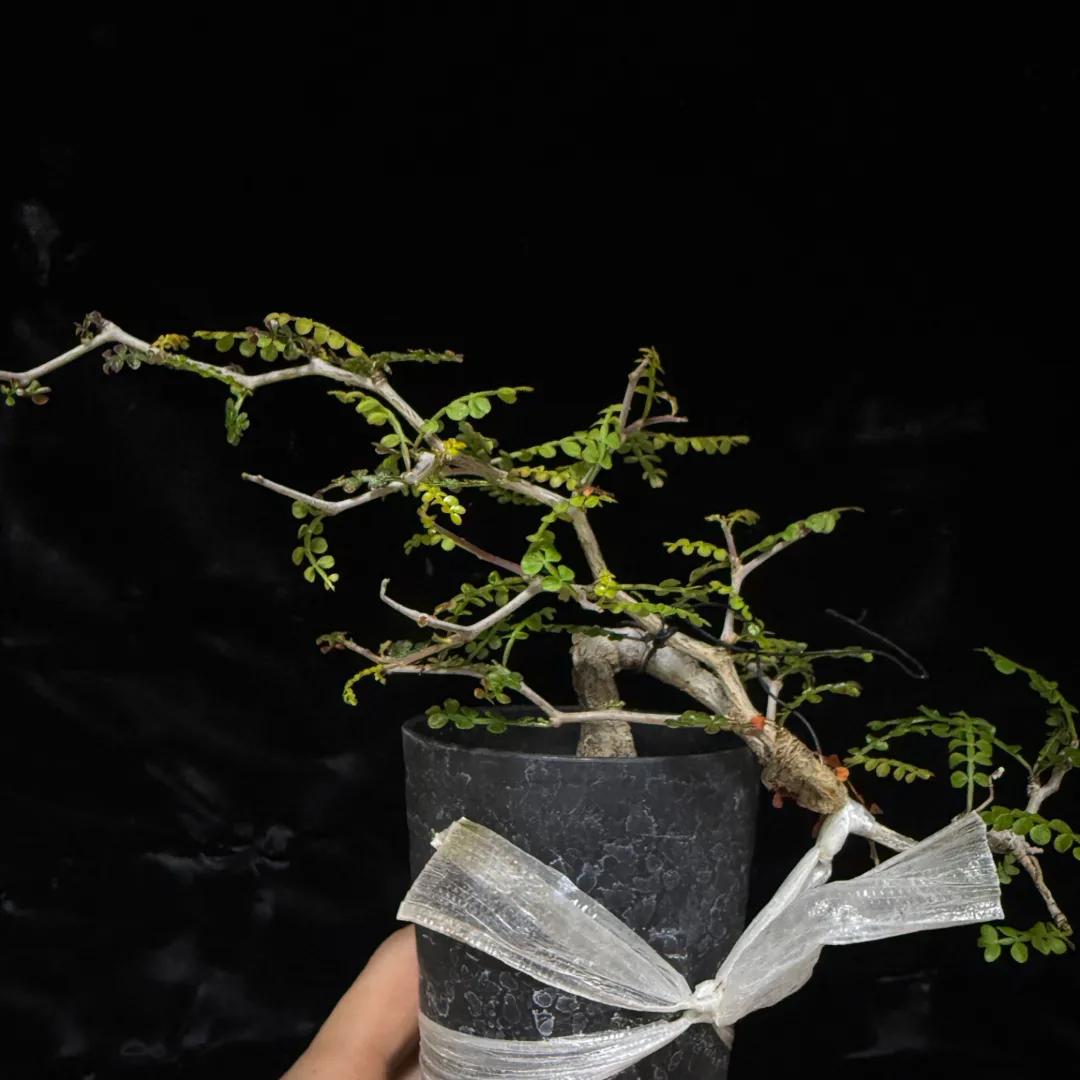
Operculicarya is a genus of the cashew family with eight species native to Madagascar, the Comoro Islands and Aldabra. They are small dioecious trees of dry rocky habitats with swollen, thickened trunks, corky bark and small pinnate leaves. In horticulture O. pachypus and O. decaryi are grown as caudiciform succulents and often trained like bonsai. Three species, O. decaryi, O. hyphaenoides and O. pachypus, are listed in CITES Appendix II.
Scientific Name
Anacardiaceae